


The beauty of forgetting
There are certain places I fear forgetting more than people. Not because the people mattered less, but because distance from those places almost feels like a sentencing. Places can absorb gossip-filled laughter, the heat of a dry summer on my skin, the smell of fresh rain striking dusty streets curling through open windows, the sound of the AC whirling softly in the background. Long before faces begin to blur and voices lose their sharpness, places resist erosion. And yet even they, eventually, are destined to crumble.
Lately, I have found myself thinking about Iran as though it were already becoming an archaeological site within me. Not yet ruins, but fragmented and preserved unequally. Certain memories remain strangely vivid, while others only seem to return after a dream has brushed against them. I have memories of playing with a water hose alongside what felt like a million cousins in the baagh (garden), joining my grandmother on her daily walk to the bakery and taking in the sweet fragrance of fresh pereshki (sweet donuts) – a phantom smell that still seems to embrace me randomly. I remember the family gatherings that stretched into the early hours of the morning over tea and endless games of backgammon; being crammed in the backseat of my grandads notoriously slow car during long drives across the country to the luscious green landscapes of the North of Iran.
And perhaps that is what ruins really are – not simply the organised remains of a great civilisation – but evidence that something once intensely lived enough to leave it's traces behind.
The ancient world understood this fear of forgetting far more deeply than we do. The Greeks feared oblivion intensely. For them, to be forgotten, in many ways, was a harsher second death. Stories of heroic glory, poetry guided by the muses, monuments carved into stone – there were all mortal attempts to resist disappearance. The Persians too carved their victories into stone at Persepolis as acts of preservation. Images of delegations frozen eternally in procession, carrying gifts towards the king were desperate in their permanence. A solid attempt of a civilisation securing itself against time.
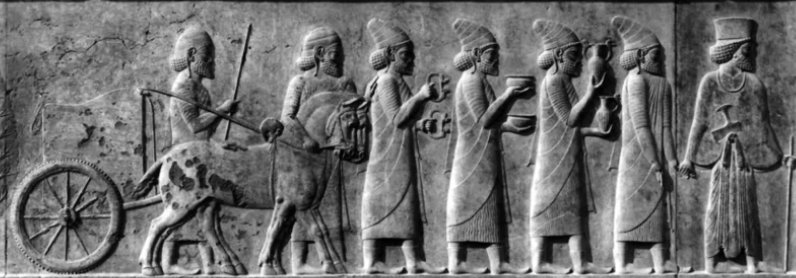
A ruin is both a presence and an absence simultaneously. As we stand before broken columns and monasteries, we try to reconstruct a world that no longer fully exists - similar to our memories. We remember fragments. A street corner. A taste. A sentence someone said to us years ago, and the rest we rebuild around those surviving pieces.
A year or so ago, I watched an incredible Irish play, which if you know, tend to be filled with comedy interrupted by these magnificent little pockets of sobering thought. Near the end, there was a line that lingered with me long after the curtains fell, that “so much of living is really just forgetting”.
The slow and inevitable fading of things can be so frightening as we get older. There are already moments from my life that feel just out of reach, as though they happened adjacent to me rather than to myself directly. Sometimes, I struggle to remember the layout of a relative’s house, or the sound of someone’s voice and I feel an irrational panic, as though I have failed some responsibility to remember properly.
But then it dawns on me that perhaps this is what living was always meant to be. That “so much of living is really just forgetting”. Writing for me, can take fleeting moments, thoughts, places and pin them briefly into language. It can slow down the erosion and leave beautiful traces.
- Sham


Comments